Torn between coffee on your own dock and a quick walk to bakeries on Front Street? If you’re weighing waterfront versus in-town living in Poulsbo, you’re choosing between two standout lifestyles. Each offers real perks and real tradeoffs, from price and commute to permits and maintenance. This guide gives you a clear, local framework to decide with confidence. Let’s dive in.
Poulsbo market snapshot
Recent public MLS and aggregator snapshots place Poulsbo’s median single-family price in the roughly $640k–$700k range, depending on the platform and month. By comparison, a waterfront-only read of 2023–2024 sales points to a median around $1.4M. Because waterfront sales are a small share of the market, medians can swing year to year and parcel details matter a lot.
What drives the premium? Linear feet of shoreline, moorage potential, bank type, and the presence or absence of permitted structures can move value significantly. Inventory is thinner on the water, so expect fewer direct comps and more volatility in days on market.
Waterfront living: what to expect
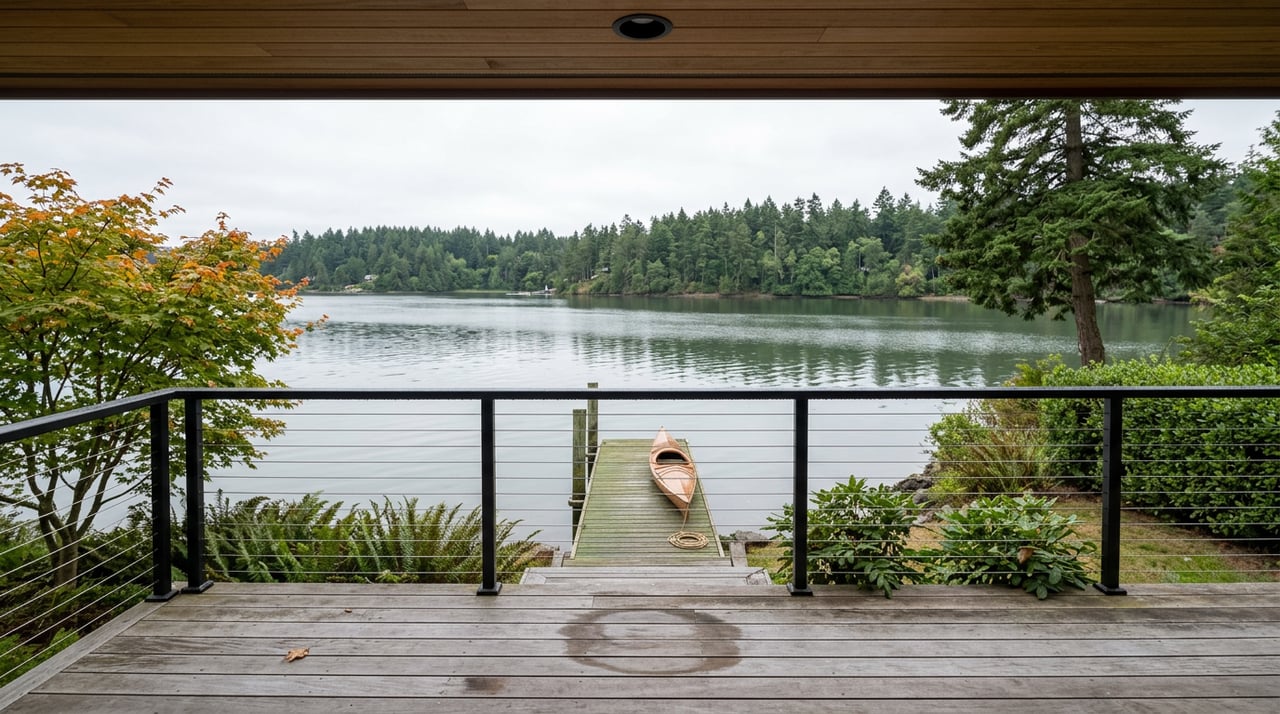
Waterfront in Poulsbo centers on Liberty Bay and nearby inlets. You’ll find single-family homes on sloping or low-bank lots, a mix of classic cottages and modern renovations with big view windows and generous decks. Some properties have docks, bulkheads, stairs, or beach access, while others keep a more natural shoreline. Many buyers prize views, privacy, and the ability to launch a kayak or moor a boat.
The Port of Poulsbo anchors daily waterfront life downtown with public and transient moorage, events, and a walkable boardwalk scene. If you want boating access without private moorage, explore options at the Port of Poulsbo marina.
In-town living: what to expect
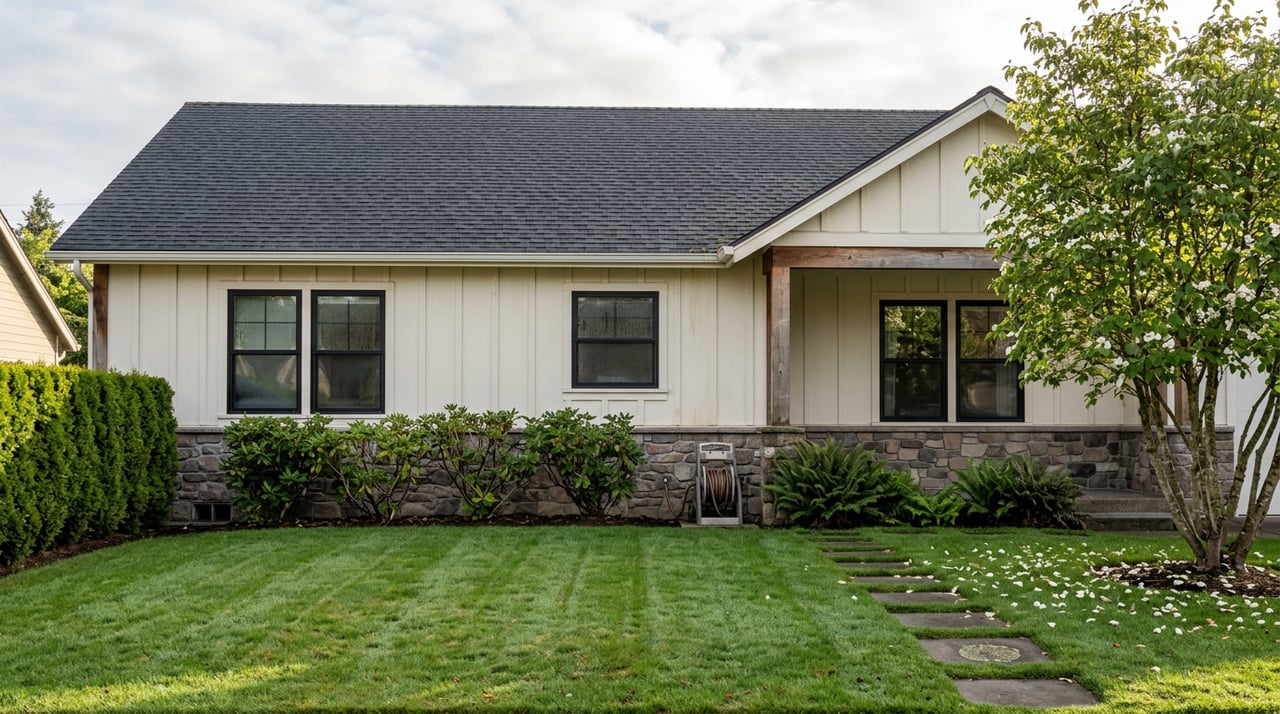
Downtown Poulsbo’s Front Street delivers a compact, walkable village experience with shops, galleries, bakeries, restaurants, and a waterfront park at the marina. Within and around the historic district, you’ll see small-lot single-family homes, townhomes, and some condo options. Buyers choose in-town for everyday convenience, easier guest parking, and lower, more predictable maintenance.
To get a feel for the street-level rhythm, browse the Historic Downtown Poulsbo events and business mix. Walkability varies block by block, with the Front Street corridor offering the highest concentration of daily amenities.
Commute and transport
Ferries at a glance
For Seattle-bound commuters, Poulsbo pairs with either the Kingston–Edmonds state ferry or the Kingston passenger fast ferry to downtown Seattle. The Kingston–Edmonds crossing is about 30 minutes on the water; see the current Washington State Ferries schedule. The Kitsap Transit Kingston fast ferry makes a roughly 40-minute passenger-only crossing; check Kitsap Transit’s fast ferry page for times and fares.
Park & Ride and timing
Poulsbo’s North Viking Transit Center offers Park & Ride and bus connections that sync with ferry schedules, a routine option for avoiding vehicle queues. City transportation planning documents outline these connections as standard commute tools; see the City of Poulsbo transportation chapter for context. Door-to-door times to downtown Seattle often land in the 60–90+ minute range depending on route, schedule matching, parking, and wait times.
Pro tip: run your door-to-door route at your actual commute hour. Factor in terminal drive time, queueing, the ferry crossing, and the post-ferry leg.
Shoreline rules, maintenance, and risk
Permits and approvals
Waterfront living comes with a distinct permit landscape. Locally, Poulsbo’s Shoreline Master Program regulates over-water structures, shoreline stabilization, and work within shoreline jurisdiction. Review the city’s guidance and ask for a property’s shoreline permit history on the City of Poulsbo shoreline page.
In-water work can also trigger state and federal reviews, often coordinated through the JARPA process. Typical items include a WDFW Hydraulic Project Approval, possible DNR authorization if state-owned tidelands are involved, and Army Corps/Ecology review. For an overview of interagency permitting, see Ecology’s guidance on aquatic approvals and the JARPA process.
Maintenance and costs
Shoreline infrastructure needs ongoing care. Bulkheads and seawalls, docks, pilings, and floats can require periodic repair or full replacement. Planning-level guidance suggests hard armoring can run in the hundreds to low-thousands of dollars per linear foot depending on site and design, while nature-based alternatives have different cost profiles. For context on methods and tradeoffs, review FHWA’s green infrastructure implementation guide. Always seek site-specific engineering estimates.
Flood zones and long-term exposure
Many Poulsbo shorelines fall within FEMA flood hazard zones. Before you offer, check the parcel’s FEMA map panel and zone designation, request any elevation certificate, and price potential flood insurance. Kitsap County’s FEMA hazard map index is a helpful starting point: FEMA Flood Hazard Zones (Kitsap County). Regional sea-level rise projections indicate measurable increases this century, so consider lifecycle costs for shoreline structures.
Decision guide: waterfront vs in-town
Use these quick filters to align the choice with your daily life:
- Water use: If you’ll boat, paddle, or swim several times per week, direct access may be worth the premium. If it’s occasional, consider in-town with marina options.
- Budget: Treat the citywide median as a baseline and expect a meaningful premium for waterfront. In recent years, waterfront medians have been roughly double the town median in Poulsbo.
- Maintenance appetite: Waterfront often means higher and more variable upkeep and multi-agency permitting. In-town typically offers simpler maintenance.
- Walkability: If a village lifestyle is key, prioritize Front Street or nearby neighborhoods within a short walk of the marina and everyday errands.
- Commute: Test a full door-to-door plan at peak times. Compare Kingston–Edmonds vehicle ferry versus the Kingston fast ferry plus connections.
What to verify on tours
Waterfront checklist
- Shoreline permits and authorizations: Request copies of any JARPA filings, WDFW HPA, DNR lease/authorization, and Army Corps/Ecology approvals. Confirm status and transferability. Review the city’s SMP guidance here and Ecology’s permit overview here.
- Dock and moorage: Clarify tideland ownership, whether moorage is private or shared, permitted slip size, and recent piling/float/electrical work. For alternative moorage, explore the Port of Poulsbo.
- Bulkhead or seawall: Document material, age, visible wear, and any geotechnical reports. Ask for contractor receipts and approvals; reference methods in FHWA’s implementation guide.
- Nearshore habitat: Sensitive habitat like eelgrass can limit future in-water work. See regional shore-friendly resources via the Northwest Straits Foundation.
- Flood zone and elevation: Identify FEMA zone and request an elevation certificate and insurance quote. Start with Kitsap County’s FEMA map index.
- Utilities and septic vs. sewer: Confirm sewer connection or septic status and permits; older systems can affect renovation plans and costs.
- Easements and boundaries: Verify the ordinary high water mark, recorded easements, and any public path or right-of-way.
- Title and DNR leases: If over-water structures rest on state bedlands, confirm any DNR authorization and lease terms.
In-town questions
- Daily rhythm: What’s the walk time to Front Street, the marina, groceries, and coffee?
- Parking and guests: How easy is on-street or dedicated parking for visitors during peak times?
- Noise and events: How does the block feel during weekend events and holidays?
- Commute logistics: What’s your route to the Park & Ride and which ferry timing fits your schedule?
Putting it together
Both lifestyles shine in Poulsbo. Waterfront living centers your day on the bay, with privacy, views, and the potential for moorage, balanced by a higher price point and more complex maintenance. In-town living prioritizes ease: walkable dining and errands, quicker starts and finishes to a commute, and more predictable ownership costs. If you focus on your daily routine and verify shoreline details early, you’ll make a confident choice.
When you’re ready to tour, we’re here to align the right property with how you actually live. Schedule a private consultation with The Agency Bainbridge Island.
FAQs
What do Poulsbo waterfront homes typically cost compared to in-town?
- Recent reads of 2023–2024 sales suggest a waterfront median around $1.4M versus a citywide median near $640k–$700k; waterfront medians are more volatile due to smaller sample sizes.
How long is a Poulsbo-to-Seattle commute door to door?
- Many commuters see roughly 60–90+ minutes depending on route, ferry schedules, parking, and traffic; compare the Kingston–Edmonds ferry and the Kingston fast ferry via WSF schedules and Kitsap Transit.
Which shoreline permits should I ask for when touring a dock or bulkhead?
- Request copies of any JARPA submissions, WDFW HPA, DNR authorization, and Army Corps/Ecology approvals; also confirm local shoreline compliance via the City of Poulsbo shoreline page.
Are Poulsbo waterfront properties in FEMA flood zones?
- Many shorelines are mapped in FEMA hazard areas; check the parcel’s zone and ask for an elevation certificate and insurance quote using Kitsap County’s FEMA map index.
What if I want boating access without a private dock?
- Consider moorage and community waterfront life at the Port of Poulsbo, and compare that with the maintenance and permitting needs of a private dock.