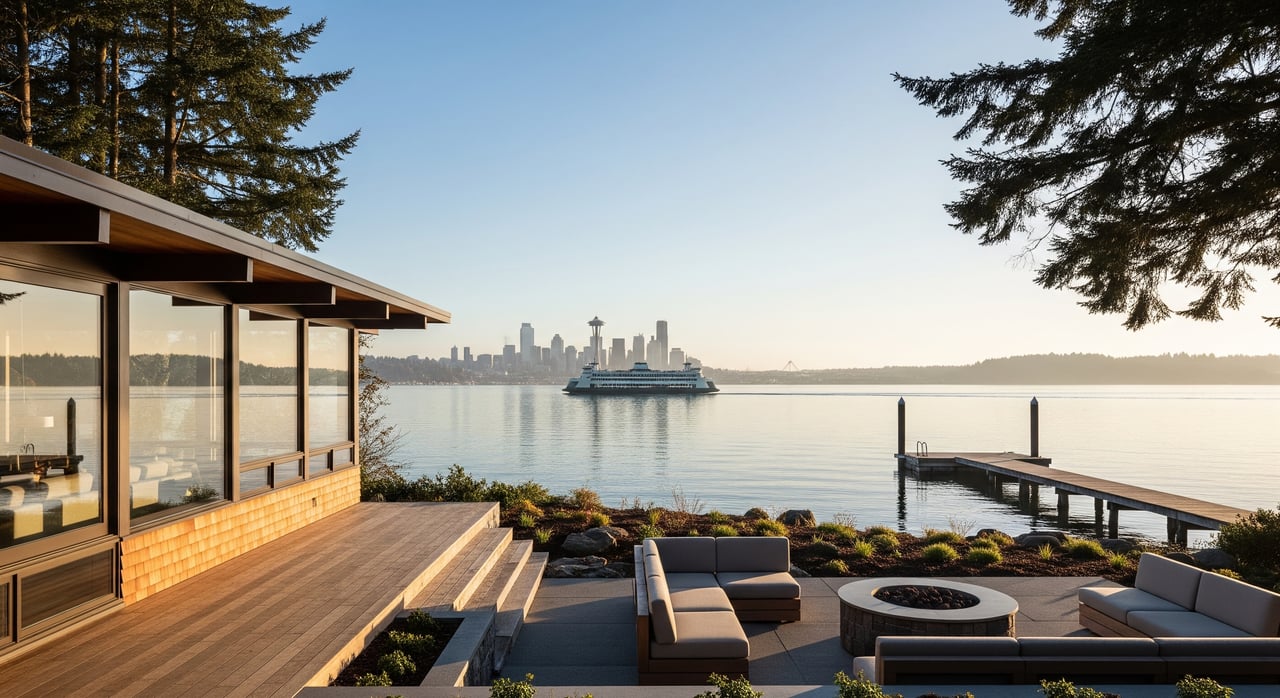
You love the calm of Bainbridge Island, but your office or clients are in Seattle. Can you make the commute work without losing your day? You can, as long as you choose the right ferry plan and map your timing around peak windows. In this guide, you’ll learn the pros and cons of walk-on versus driving on, realistic door-to-door timing, terminal logistics, and the Bainbridge neighborhoods that make commuting easiest. Let’s dive in.
Seattle–Bainbridge ferry basics
The Seattle–Bainbridge route is the primary, direct corridor for most commuters. Washington State Ferries operates vehicle ferries that also accept walk-on passengers. There are no regular passenger rail or subway links, so your last mile will be by foot, bike or e‑bike, local shuttle, bus, rideshare or a private vehicle.
If your work is near downtown Seattle, walk-on can be very efficient. If you need a car at your destination for errands or childcare, driving on gives you flexibility. Your best choice depends on how often you go in, your last-mile needs and your schedule.
Walk-on vs. drive-on: choose your model
Walk-on passengers
- Advantages: You avoid vehicle fares and queues, boarding is often quicker, and you arrive at Colman Dock in downtown Seattle within walking distance of many offices and transit connections.
- Typical last-mile options: walk, bike or e‑bike, local shuttle, short bus ride or rideshare.
- Best for: you plan to commute without a car, work downtown, or have a hybrid schedule 1–3 days a week and want to skip parking hassles.
Drive-on vehicle ferry
- Advantages: You keep a car available at the destination for errands and family needs. It gives flexibility for off-peak trips or when schedules are disrupted.
- Tradeoffs: You’ll pay vehicle fares, face potential queue times at peak sailings, and add loading and unloading time to your total commute.
- Best for: households that need a vehicle on either side, owners of second homes, or anyone with irregular schedules that require same-day driving flexibility.
Other last‑mile options
- Biking and e‑biking are increasingly popular for shorter distances on Bainbridge. Ferries allow bikes, with securement rules to follow.
- Ride-hailing and carshare can be limited on parts of the island, so check local availability near the property you’re considering.
- King County Metro and Kitsap-area transit provide bus links. Timed transfers vary by route and schedule.
Travel times and peak windows
Baseline timing
- Crossing time on the vessel is typically about 30–40 minutes. Your total door-to-door time depends on how you reach the terminal, boarding time, and last-mile travel on each end.
- For a downtown destination close to Colman Dock, a walk-on door-to-door window of about 60–90 minutes is a practical rule of thumb.
- If you’re driving on, allow an additional 10–30 minutes for vehicle queuing, loading, unloading and terminal approaches. Peak or holiday periods can add more.
Peak windows and frequency patterns
- Morning peak into downtown generally runs from about 6:00 to 9:00 AM. Afternoon return peak is roughly 3:30 to 6:30 PM.
- Weekday peak periods typically see more frequent sailings, often every 30–60 minutes on busy routes. Midday and late evening are usually hourly or less.
- Hybrid commuters often favor early morning sailings before 7:00 AM and later return sailings after 6:00 PM to avoid the tightest peaks.
Pro tip: test your commute
Before making an offer, do a commute trial during your exact windows. Try it for a few days, including different weather, and test both walk-on and drive-on if you’re undecided. Time every step, including parking, queues, and last-mile connections, so you know your realistic door-to-door rhythm.
Terminal logistics you should know
Seattle: Colman Dock
- Location: Downtown waterfront, which puts you close to many workplaces and transit connections.
- Walk-on access: Generally straightforward, with a short queue during the busiest sailings.
- Parking and drop-off: Curb space is limited. Most drivers use nearby paid garages if they leave a car in the city. Long-term commuter parking directly next to the terminal is limited.
- Transit: King County Metro buses connect to the ferry area. Timed transfers vary by route and time of day.
Bainbridge: Eagle Harbor and Winslow
- Location: The terminal sits on Eagle Harbor, a short walk to Winslow Way and the downtown district.
- Parking: Municipal lots and on-street spaces exist near Winslow but can fill at peak times. Some commuters use on-island residential or private lots, depending on availability.
- Bike and pedestrian access: Winslow and some central neighborhoods are walkable or a short bike ride to the terminal. Other areas will require a quick drive.
- Local transit: Kitsap Transit and local shuttles provide connections, though schedules can be sparse outside commute peaks.
Tickets, passes, and policies
- You can purchase walk-on and vehicle fares. Multi-trip and monthly passes are available for frequent users. If you commute often, review pass options for potential savings.
- Bikes are allowed on ferries. Follow securement and space rules and confirm any e‑bike battery guidance.
- Pets are generally allowed in outdoor areas. Confirm current policy details before traveling.
Disruptions to plan for
Weather, mechanical issues and staffing shortages can cause delayed or canceled sailings, especially in winter or severe conditions. If you depend on reliability, build buffer time into critical days and have a backup plan for remote work or alternate travel timing.
Neighborhoods with the easiest ferry access
Distances and times are approximate. Always test the timing from a specific address during your commute windows.
Winslow
- Proximity: Closest and most walkable to the ferry, often under a 10–15 minute walk from central Winslow Way.
- Lifestyle: Highest walkability with cafés, groceries, services and transit. Ideal for walk-on commuters and hybrid workers who want quick terminal access.
- Considerations: Higher demand and pricing relative to more remote areas. Parking in Winslow can be constrained.
Wing Point, Point White, and waterfront pockets
- Proximity: Often a 5–12 minute drive to the terminal depending on exact location. Some stretches are bikeable.
- Lifestyle: Shoreline views and quieter residential streets, with quick vehicle access to the ferry.
- Considerations: Some private roads or HOA rules. Limited commercial services nearby.
Blakely, Blakely Harbor, and Ordway
- Proximity: Generally a 5–12 minute drive to Winslow and the terminal.
- Lifestyle: A mix of older homes, newer developments and some waterfront properties. Balanced access and neighborhood feel.
Battle Point and the north end
- Proximity: Typically 10–20 minutes by car depending on route and traffic. Less walkable but a reasonable drive for frequent commuters.
- Lifestyle: More suburban in character with parks nearby and a range of residential options.
Rolling Bay and the south end
- Proximity: Usually a 10–25 minute drive to the terminal. Rolling Bay offers a village center with local shops and services.
- Lifestyle: Quieter, more rural feel than Winslow, with larger lots and privacy in some areas.
- Considerations: Longer drive to the ferry and greater vehicle dependence.
Lynwood Center, Manzanita and western points
- Proximity: Varies by exact address. Some routes are faster than others, so test at your commute hour.
- Lifestyle: A mix of rural and suburban properties. You will likely use a vehicle for most errands.
Hybrid work rhythms that fit the ferry
Many island professionals cluster in-office days midweek to reduce travel frequency. Early arrival on the first or second morning sailings can reduce vehicle queues and on-deck congestion. Later returns can help you miss the tightest afternoon peak.
On remote days, plan errands during midday windows to avoid peak traffic near the terminal. If you split time between homes or keep a second home, a simple dual-home kit with chargers, toiletries and clothing can make commute days lighter and faster.
Cost and time tradeoffs to weigh
- Time: Expect a minimum of about 1 to 1.5 hours door-to-door for many walk-on commutes, longer if you drive on and include queueing and parking searches.
- Money: Factor vehicle fares, parking costs, and potential second-home expenses such as taxes, maintenance and utilities.
- Lifestyle: Winslow offers the shortest terminal access and highest walkability. Other neighborhoods trade a longer access drive for yard space, privacy and different amenities.
Buyer checklist: make the commute work
Use this quick list to reduce surprises and dial in your plan.
- Do commute trials during your intended work hours on multiple days and in different weather.
- Time every segment door-to-door, including terminal arrival, boarding and last-mile connections.
- Test both walk-on and drive-on scenarios if you might use each option.
- Confirm transit options and schedules for last-mile connections on both sides.
- Ask local owners or neighbors about terminal parking patterns and typical winter weather impacts.
- When evaluating a property, check off-street parking and whether daily car-ferry use is realistic.
- Measure bike or drive times to the terminal from the home. Shorter access can reshape daily life.
- Verify internet speeds and cellular coverage for remote-work reliability.
- Map the services you rely on, including childcare, grocery delivery and medical care.
- Consider multi-ride or monthly passes if you will commute frequently.
- Keep a flexible backup plan for service disruptions and explore e‑bike options for fast last-mile connections.
Is the Seattle–Bainbridge commute right for you?
If you work downtown a few days a week and value island living, the ferry can fit smoothly into your routine. Walk-on commuting gives you direct access to the city center with minimal hassle. Driving on adds cost and time but gives you flexibility for family logistics and variable schedules.
Your best move is to test your exact commute and choose a home that matches your access needs. If you want walkability and quick terminal access, Winslow and nearby neighborhoods are strong bets. If you prefer more space and privacy, plan for a slightly longer terminal drive and organize your week around the ferry rhythm.
Ready to explore Bainbridge neighborhoods with a commute strategy tailored to your routine? Reach out to our team at The Agency Bainbridge Island - Main Site to map options and schedule on-the-ground testing.
FAQs
How long is the Seattle–Bainbridge ferry ride?
- The time on the vessel is typically about 30–40 minutes. Door-to-door varies based on terminal access, queues and last-mile travel.
Is walking on faster than driving on the ferry?
- Often yes for downtown destinations, since you avoid vehicle queues and unloading. Your total time depends on your last-mile needs on both sides.
What are the ferry’s peak commute windows?
- Weekday peak into downtown is roughly 6:00–9:00 AM, with return peak around 3:30–6:30 PM. Early morning and later evening sailings can be less crowded.
Where should I live on Bainbridge for easy ferry access?
- Winslow is the most walkable to the terminal. Wing Point, Point White, and Blakely areas are short drives. Other neighborhoods trade longer access for space and privacy.
Is parking available at the terminals?
- Parking near both terminals is limited and can fill at peak times. Many commuters leave cars on-island, use paid garages in Seattle, or rely on bikes and transit.
Do ferries allow bikes and pets?
- Yes, bikes are allowed with securement rules. Pets are generally allowed in outdoor areas. Always check current policies before traveling.