You picture mornings on calm water, easy boat access, and a home that performs as beautifully as it looks. If you are shopping in Gig Harbor or the Tacoma–Lakewood area, or preparing to list a Pierce County shoreline property, you want to focus on features that matter most. You also want to avoid upgrades that create permitting headaches or maintenance surprises. In this guide, you will learn the waterfront home features buyers love, the materials that last in Puget Sound, and smart pre-market moves that add value. Let’s dive in.
Water access that works year-round
Safe docks, lifts, and alternatives
Buyers often prioritize a reliable way to reach the water. Floating docks and lift systems are popular because they protect boats and make daily use easier. These features are usually permit-sensitive, with rules on size, placement, and materials under local Shoreline Master Programs, the Washington State Department of Ecology’s Shoreline Management Act, and Hydraulic Project Approvals from the Washington Department of Fish and Wildlife. In some spots, shared or community moorage can offer a practical solution when private docks are limited by regulations.
Practical launch and storage
Even if you do not plan a new dock, on-lot storage matters. Buyers look for clear routes for trailers, generous turning space, and secure storage for kayaks, paddleboards, and fishing gear. Simple, ventilated racks, a lockable shed, or organized garage systems are high-impact, lower-risk upgrades. Keep parking and paths outside critical buffers where possible and confirm layout with local codes.
View glazing and daylight
Maximize sightlines with performance glass
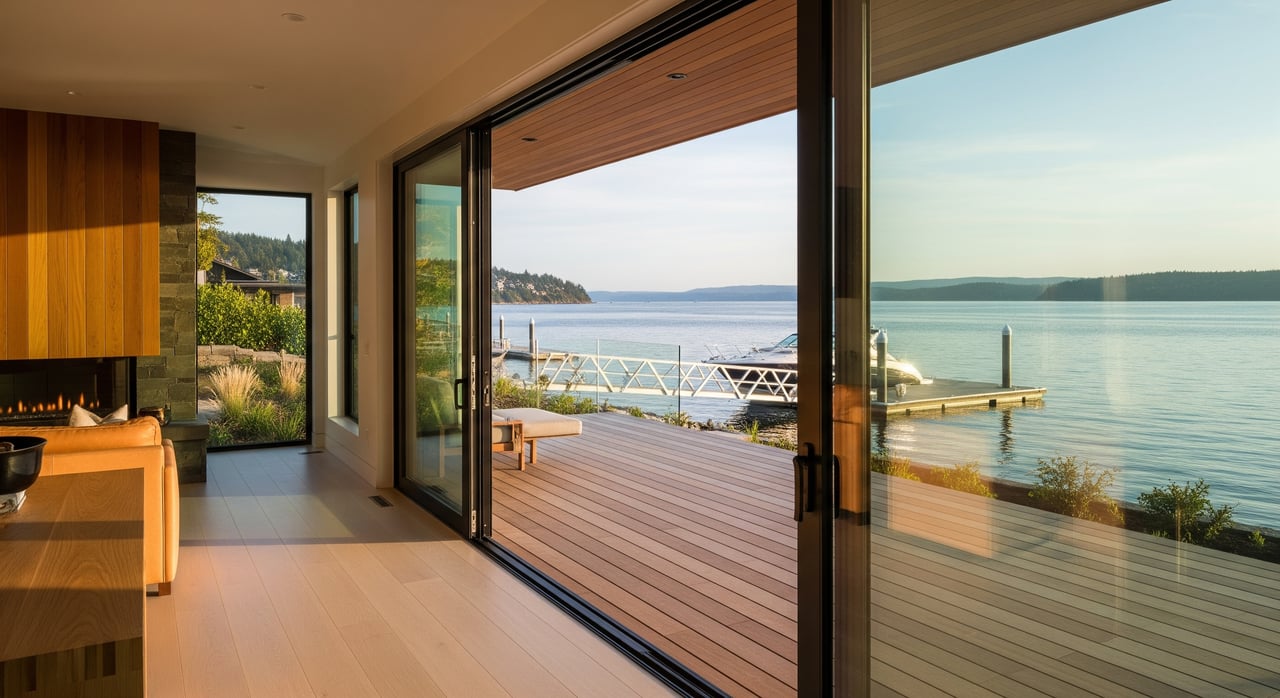
Unobstructed water views are a core goal. Floor-to-ceiling glass, clerestory windows, and operable panels can bring the shoreline in while improving airflow. In our coastal climate, high-performance components are essential. Look for insulated glazing with low‑E or spectrally selective coatings and thermally broken frames to reduce heat loss and condensation. These choices keep spaces comfortable while you enjoy the view.
Manage glare, privacy, and comfort
Orientation matters. Thoughtful shading, roof overhangs, and interior light controls reduce glare and nighttime reflection. Arrange seating and window placement to preserve sightlines from main living areas while respecting neighbor privacy. Operable windows paired with whole-house ventilation help manage moisture and fresh air year-round.
Indoor/outdoor rooms for Puget Sound weather
Covered decks and operable walls
The most-loved outdoor spaces work in every season. Covered terraces, screened porches, and sunrooms extend your living area without sacrificing comfort. Large sliding or folding doors allow you to open the house to the shoreline on calm days, then close up tight when the marine layer rolls in. Add infrared heaters, gas fire elements where allowed, and integrated drainage so the space performs through cool months and wet days.
Durable, slip-resistant finishes
For decks and outdoor flooring, choose materials that stand up to marine moisture. Capped composite decking, textured tile, or well-finished hardwoods with anti‑slip treatments keep surfaces safe and low maintenance. In areas close to the shoreline, review whether covered or expanded structures might trigger shoreline permits before you build.
Low-maintenance coastal landscaping
Native plantings and soft-shore buffers
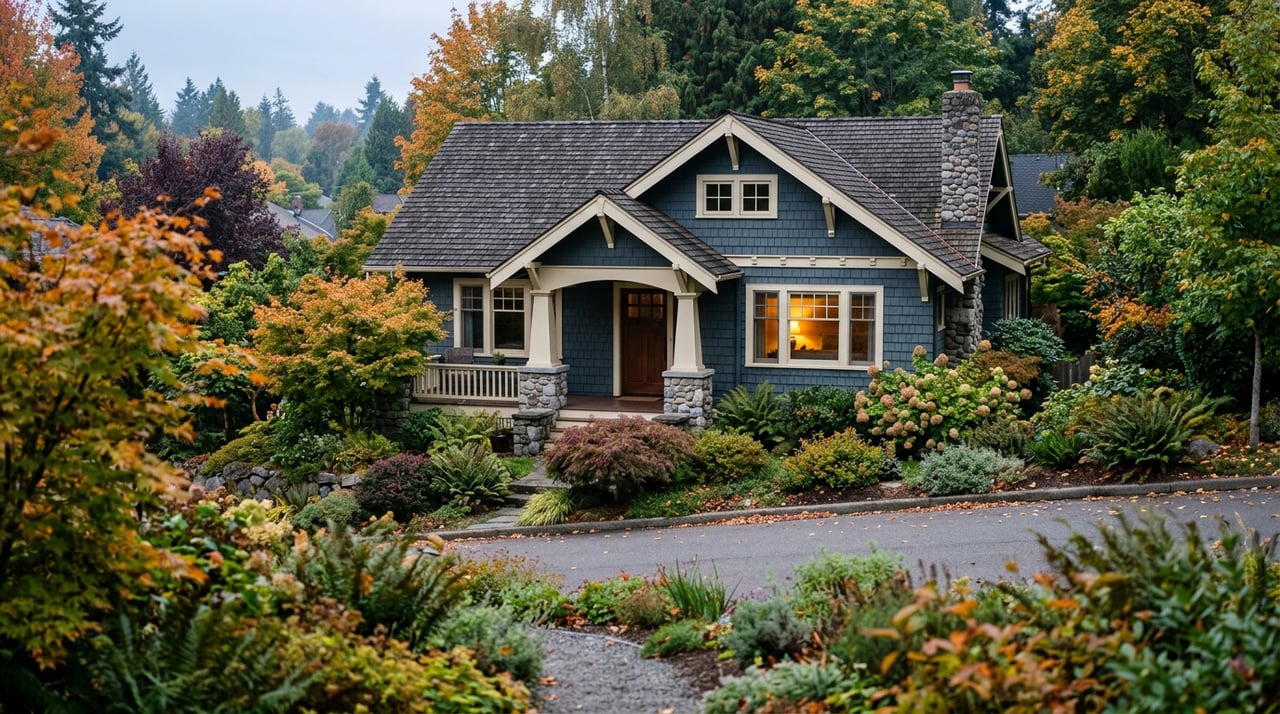
Buyers favor landscapes that look great with less work. Replace large lawns with layered native plantings that handle salt spray and wet soils. Groundcovers, shrubs, and trees suited to Puget Sound reduce irrigation and support habitat. Many local shoreline programs encourage native buffers and limit vegetation removal near the water, so a naturalized edge is both attractive and often expected.
Stormwater and erosion basics
Permeable paving, gravel paths, and rain gardens help manage runoff while easing upkeep. These systems can also align with local stormwater standards. If your property has bank stabilization or erosion concerns, soft-shore strategies and native plantings are commonly preferred over new bulkheads, which may be restricted and require extensive review.
Arrival experience and parking
Driveways, guest parking, and easy circulation
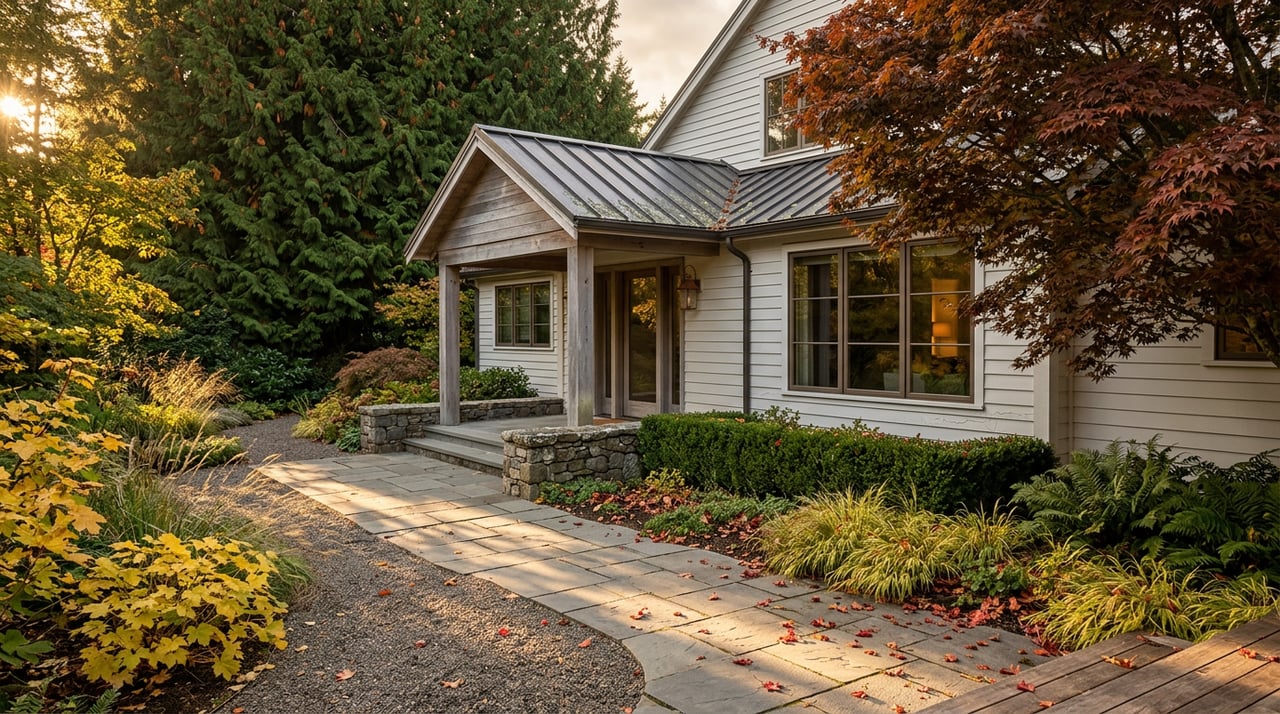
A polished arrival sequence signals quality. Buyers notice safe, well-graded driveways, defined guest parking, and a clear pedestrian path to the entry. On many waterfront lots, grades and easements shape how you move from car to water. Investing in simple, durable surfacing and a welcoming front porch or staging area for gear adds everyday convenience.
Lighting that protects views
Good lighting supports safety without overwhelming the shoreline. Choose shielded fixtures and thoughtful placement to reduce glare and light spill. This protects neighbor views and local wildlife while creating a calm nighttime setting.
Systems and materials that last
Corrosion-aware construction
Marine air accelerates wear. Use corrosion-resistant fasteners, such as stainless steel 316 in exposed locations, and specify marine-grade metals where appropriate. For exteriors, fiber cement, engineered wood with proper coatings, or durable species like cedar perform well with regular maintenance. Select anti‑slip finishes for decks and detail connections to prevent trapped moisture.
HVAC and ventilation for glassy homes
Large view walls change heating and cooling needs. Right-sized heat pumps and efficient mechanical systems work well in our climate. Whole-house ventilation and proper insulation help manage condensation common to marine environments, improving comfort and air quality.
Seller game plan: high-impact upgrades
Quick wins with low permit risk
If you plan to list in the next season, focus on improvements that boost perceived value without lengthy approvals:
- Organized, secure gear storage with dedicated racks or a lockable shed.
- Native landscaping refresh, clear paths, and upgraded, shielded lighting.
- Exterior maintenance focused on corrosion-prone areas and fresh, coastal-appropriate finishes.
- A refined arrival sequence with defined parking and an inviting entry court.
Improvements that need planning
Some “dream” features require more runway. New docks, lifts, boat houses, bulkheads, and major grading are often permit-intensive and may trigger mitigation. Large new glazing areas or footprint changes also require careful review. Consult local shoreline staff early so you avoid noncompliant work that slows or complicates a sale.
Buyer due diligence checklist
Before you write an offer, verify details that shape daily use and long-term value:
- Confirm permits, as‑builts, and maintenance records for any dock, lift, or bulkhead.
- Identify shoreline or critical area buffers and the rules that apply to vegetation and structures.
- Review erosion and flood risks, including any recent site assessments.
- Clarify moorage rights and any shared dock agreements and costs.
- Check utilities for year-round capacity, including power for lifts, hot tubs, or EV charging.
- Understand insurance needs, including flood and earthquake, and any historical claims.
How we help you focus on what matters
You want a waterfront property that performs as well as it looks. Our team brings a design-forward lens and local market fluency to help you prioritize features that elevate daily life while avoiding surprises during permitting and inspections. Whether you are refining a buyer wish list or mapping a seller’s pre-market plan, we guide you toward upgrades that maximize view enjoyment, reduce maintenance, and meet local shoreline expectations.
If you are considering a move in Gig Harbor or the Tacoma–Lakewood corridor, we are here to help you align lifestyle goals with the realities of Puget Sound waterfront. For a tailored strategy and confidential guidance, connect with us at The Agency Bainbridge Island - Main Site.
FAQs
What waterfront features add the most value in Gig Harbor?
- Reliable water access, year-round indoor/outdoor living spaces, high-performance view glazing, low-maintenance native landscaping, and organized gear storage consistently rank high.
Are new docks typically allowed on Pierce County shorelines?
- New docks can be allowed but are regulated; size, materials, and location are controlled by local Shoreline Master Programs and may require state approvals.
What landscaping works best near Puget Sound water?
- Native, salt-tolerant plantings with permeable paths and rain gardens reduce upkeep, support habitat, and align with common shoreline buffer expectations.
How do I reduce condensation on large view windows?
- Choose insulated, low‑E glazing with thermally broken frames, pair it with proper ventilation, and right-size HVAC for the home’s glass area.
What storage solutions do buyers want for boats and gear?
- Secure, ventilated storage for paddlecraft and fishing gear, clear trailer access and turning space, and well-planned parking near the launch or dock.
Which improvements should sellers prioritize before listing?
- Focus on lower-risk upgrades like storage organization, native landscaping, lighting, entry hardscape, and exterior maintenance on corrosion-prone areas.
Do covered outdoor rooms require shoreline permits?
- It depends on location and footprint; structures near the tidal zone or within buffers often need review, so consult local shoreline staff early.
What due diligence should buyers do on existing docks?
- Verify permits and as‑built drawings, maintenance records, and any shared moorage agreements, and assess condition and compliance with current standards.